 English
 Español
  Português
  русский
  Français
  日本語
日本語  Deutsch
  tiếng Việt
  Italiano
  Nederlands
  ภาษาไทย
  Polski
  한국어
한국어  Svenska
  magyar
  Malay
Malay  বাংলা ভাষার
  Dansk
Dansk  Suomi
Suomi  हिन्दी
  Pilipino
  Türkçe
  Gaeilge
  العربية
  Indonesia
  Norsk
Norsk  تمل
تمل  český
český  ελληνικά
  український
  Javanese
  فارسی
فارسی  தமிழ்
தமிழ்  తెలుగు
  नेपाली
  Burmese
  български
  ລາວ
ລາວ  Latine
  Қазақша
  Euskal
  Azərbaycan
  Slovenský jazyk
  Македонски
  Lietuvos
  Eesti Keel
  Română
  Slovenski

Call Us
+86-15219932883
Email Us
sophia@lightdailt.com

What Makes Track Lighting a Smarter Choice for Modern Spaces?
Abstract: Choosing the right lighting is rarely just about brightness. Many buyers struggle with dark corners, flat room layouts, inflexible fixtures, and products that look good online but fail in real projects. This article explains why Track Lighting has become a practical solution for homes, retail stores, offices, galleries, and hospitality spaces. It explores how flexible beam direction, cleaner ceiling lines, easier upgrades, and more intentional light distribution can solve common lighting problems. It also shows what to look for before buying, how to compare options, and why a reliable manufacturer such as Zhongshan Dadi Lighting Technology Co., Ltd. matters when consistency, appearance, and long-term performance are on the line.
Contents
- Article Outline
- Why do buyers keep running into lighting problems?
- Why is Track Lighting more flexible than traditional fixtures?
- Where does Track Lighting work best?
- How does Track Lighting compare with other lighting options?
- What should buyers check before placing an order?
- Which mistakes should buyers avoid?
- FAQ
- Conclusion
Article Outline
- The real reasons lighting projects often disappoint
- How Track Lighting improves control, layout freedom, and visual focus
- The most suitable commercial and residential applications
- A side-by-side comparison with common fixture types
- Key buying standards for performance and durability
- Common purchasing mistakes and how to avoid them
- Answers to the questions buyers ask most often
Why do buyers keep running into lighting problems?
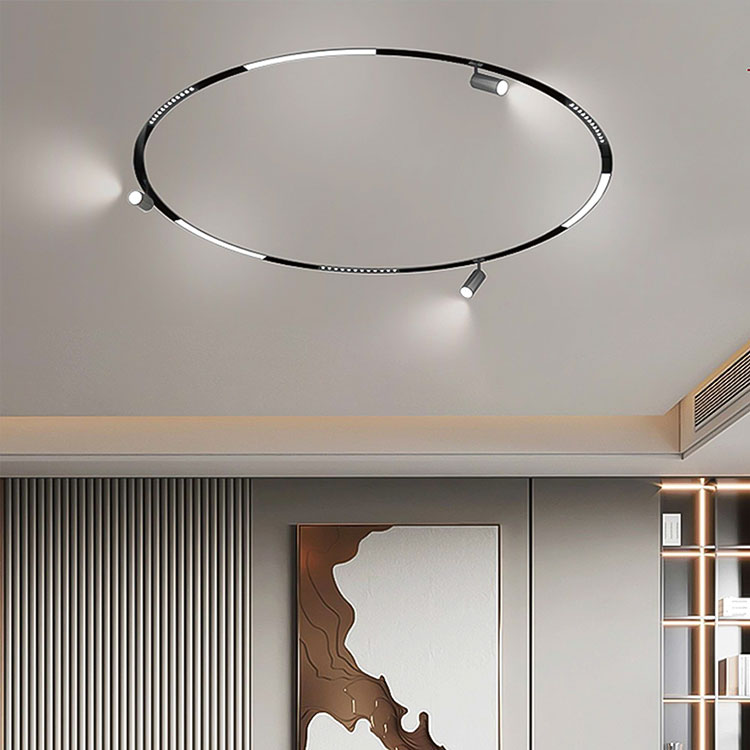
A lot of lighting decisions are made too late in a project, and that is where trouble starts. Someone chooses a fixture because it looks clean in a catalog, but once it is installed, the beam angle is wrong, the room feels uneven, and key areas still need extra light. In retail environments, products lose detail because the light does not hit them at the right angle. In offices, the result can feel harsh or flat. In homes, people often discover that one fixed ceiling light cannot adapt to reading, dining, relaxing, and display needs at the same time.
That is exactly why Track Lighting continues to gain attention. Instead of forcing one lighting direction for the entire room, it allows users to position multiple light heads along a track and direct each one where it actually matters. This is not just a design feature. It is a practical answer to one of the biggest pain points in lighting: spaces change faster than fixed fixtures do.
For buyers, flexibility is not a luxury. It means fewer costly changes later. It means the same installation can adapt when furniture moves, displays rotate, or a business updates its interior concept. That is one reason companies such as Zhongshan Dadi Lighting Technology Co., Ltd. have invested in developing lighting systems that feel easier to apply across different project types.
Why is Track Lighting more flexible than traditional fixtures?
The biggest strength of Track Lighting is simple: it gives control back to the user. Traditional ceiling lights usually stay fixed in one place with one general direction. If the room layout changes, the light no longer works as intended. With a track system, the rail remains in place while the light heads can often be repositioned, added, removed, or redirected with far less disruption.
That flexibility creates several real-world advantages:
- Better focus: Light can be aimed at shelves, artwork, counters, dining tables, workstations, or architectural details.
- Cleaner planning: One track can support multiple lighting points without cluttering the ceiling with many separate fixtures.
- Easier updates: When the use of a space changes, lighting can change with it.
- Layered atmosphere: Different beam directions create depth instead of flat, uniform brightness.
- Improved visual comfort: Properly selected heads and beam angles can reduce wasted light and help avoid awkward glare zones.
Buyers also appreciate that Track Lighting can support both functional and decorative goals. A project may need bright task lighting in one area and softer visual emphasis in another. Instead of mixing unrelated fixtures, a well-planned track system can create a more consistent look while still serving multiple purposes.
Where does Track Lighting work best?
One reason buyers are drawn to Track Lighting is that it works across a surprisingly wide range of environments. It is not limited to galleries or luxury shops. In fact, its adaptability makes it useful in many everyday spaces.
| Space Type | Why It Works | Typical Lighting Goal |
|---|---|---|
| Retail Stores | Easy to aim at products, windows, and featured displays | Highlight merchandise and increase visual appeal |
| Residential Interiors | Helps one room serve multiple daily activities | Combine ambient and accent lighting |
| Offices | Supports cleaner ceiling design and controlled direction | Improve focus and spatial definition |
| Showrooms | Flexible enough for changing displays or layouts | Direct attention to key presentation zones |
| Hospitality Spaces | Supports mood creation while keeping the layout refined | Balance comfort, style, and practical visibility |
The practical value is easy to see. In a boutique, the owner may refresh product arrangements every few weeks. In a home, a dining area may later become a work corner. In a showroom, a seasonal campaign may require a completely different focal path. Fixed lighting resists those changes. Track Lighting is designed to move with them.
How does Track Lighting compare with other lighting options?
Buyers often compare track systems with downlights, pendant lights, or standard ceiling fixtures. Each option has value, but they solve different problems. If the project calls for adaptability and directional control, Track Lighting usually stands out.
| Lighting Type | Main Strength | Main Limitation |
|---|---|---|
| Track Lighting | Directional flexibility and scalable layout | Requires planning for beam angles and spacing |
| Downlights | Clean recessed appearance | Less adaptable after installation |
| Pendant Lights | Strong decorative presence | Often focused on one area only |
| Ceiling Fixtures | Simple general lighting | Limited control and less visual drama |
This does not mean one category replaces all others. It means buyers should match the fixture type to the actual challenge of the space. When the challenge is flexibility, zone definition, or accent emphasis, Track Lighting is often the more intelligent answer.
What should buyers check before placing an order?
A good-looking product page is not enough. Buyers need to look past the surface and judge whether the system can perform reliably in real use. Before purchasing Track Lighting, these points deserve close attention:
- Track compatibility: Confirm whether the heads, drivers, and rails match the same system standard.
- Beam angle options: Narrow beams are useful for emphasis, while wider beams help with general illumination.
- Color temperature choices: Warm light feels softer and more intimate, while neutral or cooler tones fit task-focused settings.
- Material quality: Aluminum housing, stable structure, and clean finishing all matter for durability and appearance.
- Installation method: Surface-mounted, recessed, suspended, or magnetic systems may suit different ceilings and project conditions.
- Maintenance convenience: Modular design can make replacement and upgrades much easier later.
- Supplier support: Responsiveness, production consistency, and product clarity matter more than many buyers expect.
This is where manufacturer experience becomes meaningful. Zhongshan Dadi Lighting Technology Co., Ltd. is active in product development related to track-based lighting applications, and buyers often care about that because consistency across multiple units can make or break a professional project. A visually clean sample means little if the delivered batch varies in finish, performance, or assembly quality.
Which mistakes should buyers avoid?
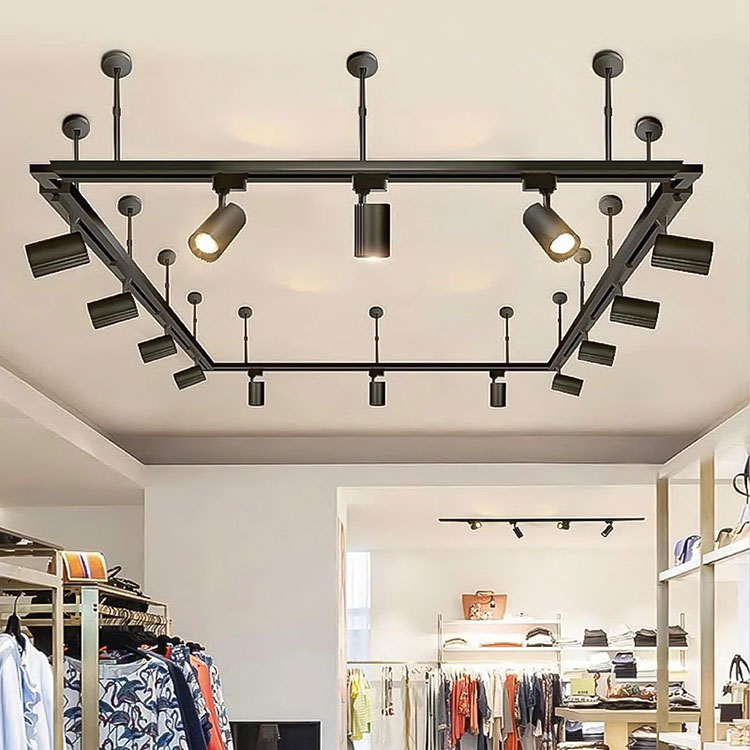
Even a strong product can disappoint when the planning is weak. Many buyers do not fail because they chose Track Lighting. They fail because they treated it as a decorative afterthought instead of a lighting system with real technical and spatial impact.
- Choosing only by appearance: The fixture shape matters, but beam control and layout logic matter more.
- Ignoring the purpose of the room: A store, office, lounge, and dining room need very different lighting behavior.
- Using too few heads: A long track with weak coverage creates dark gaps and visual imbalance.
- Forgetting glare control: Bright light without thoughtful direction can make a space less comfortable.
- Skipping supplier communication: Small specification misunderstandings can lead to expensive project delays.
Smart buyers ask a simple question before ordering: what exactly must this light do in the space? Once that answer is clear, the right track layout, head type, and beam distribution become much easier to define.
FAQ
Is Track Lighting only for commercial spaces?
No. It works very well in homes, especially in open-plan interiors, kitchens, living areas, hallways, and spaces where one room serves multiple purposes.
What makes Track Lighting suitable for changing layouts?
The ability to reposition or redirect light heads gives users more freedom when furniture, displays, or room functions change over time.
Does Track Lighting look too technical for modern interiors?
Not necessarily. Many systems now feature minimal lines, clean finishes, and discreet profiles that fit contemporary interiors very naturally.
Which buyers benefit most from Track Lighting?
Retail owners, designers, contractors, architects, and homeowners who want flexible control and a cleaner lighting layout usually benefit the most.
Is Track Lighting difficult to maintain?
A well-designed modular system is usually easier to update than many fixed alternatives because individual heads or components can often be adjusted or replaced without reworking the full ceiling layout.
Why does Track Lighting continue to stand out?
Buyers rarely regret having more flexibility in a lighting system. They regret being locked into a fixture that no longer fits the room, the layout, or the business goal. That is why Track Lighting remains such a strong option for modern projects. It supports movement, adjustment, emphasis, and cleaner visual planning in a way many fixed fixtures simply cannot.
Whether the goal is to improve product presentation, refine a residential interior, or build a more adaptable commercial environment, the right Track Lighting system can solve practical problems while also improving the overall look of the space. If you are looking for a manufacturer that understands both functional performance and product presentation, Zhongshan Dadi Lighting Technology Co., Ltd. is worth considering. To explore product options, discuss project requirements, or request tailored support for your next lighting application, contact us today.
Send Inquiry


X
We use cookies to offer you a better browsing experience, analyze site traffic and personalize content. By using this site, you agree to our use of cookies.
Privacy Policy
News
 The difference between line lights and wall wash lights2024/05/16
Line lights and wall washing lights are common outdoor lighting equipment, they play an important role in urban architecture, landscape decoration and other fields.
 What is LED line light?2024/05/16
LED line light series is a high-end flexible decorative light, which is characterized by low power consumption, long life, high brightness, easy to bend, maintenance-free and so on.